 A major honor for IBC SOLAR: The agri-PV solar park in Veringenstadt has been nominated as a finalist for the prestigious The smarter E AWARD 2026 in the “Outstanding Projects” category.
The award will be presented during The smarter E Europe on June 22, 2026, in Munich. According to the organizer, an independent jury of experts evaluates projects in the fields of photovoltaics, energy storage, e-mobility, and integrated energy solutions.
A milestone for agri-PV
The Veringenstadt Agri-Solar Park is based on single-axis solar trackers and combines agricultural use with solar power generation. With an installed capacity of 8.5 MWp, the plant generates approximately 11 GWh of solar power annually. This amount is equivalent to the annual electricity consumption of more than 3,100 households.
A key aspect of the project is dual land use: over 85% of the agricultural land is preserved and can continue to be farmed.
Together with our long-standing client, wpd GmbH, we successfully completed the project last year as an EPC partner. If you’d like to learn more about this project, please feel free to read on here.
Technology with flexible orientation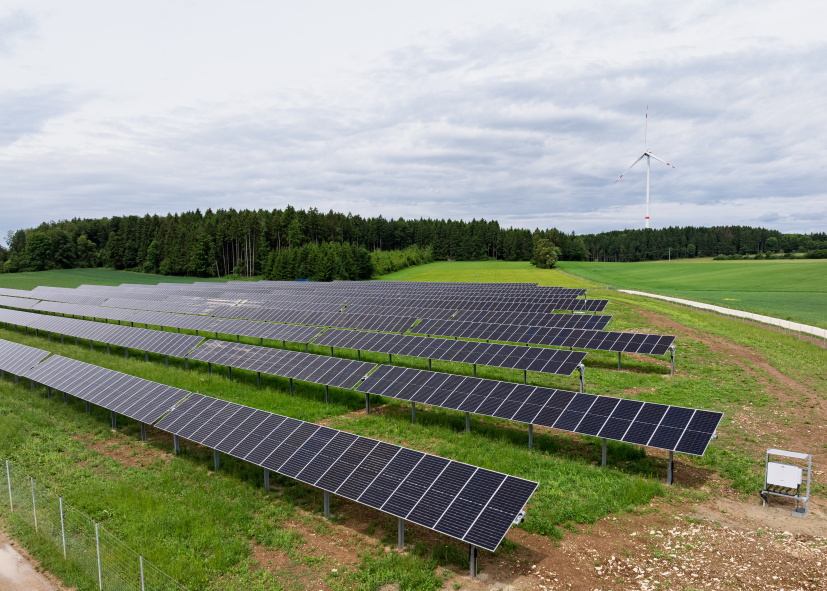
At the heart of the project are modern single-axis solar trackers combined with high-performance bifacial glass-glass modules. This technology offers the following advantages:
- The modules automatically track the sun’s position and can be tilted according to operational requirements
- Depending on the location, higher yields can be achieved than with fixed-mount systems.
- The system can be flexibly adapted to agricultural requirements.
The modules can be tilted between 60° and 90°, creating sufficient space for agricultural machinery. Furthermore, the entire system design was specifically tailored to the needs of farmers, including optimized row spacing and generous aisle widths.
A boost for the future
We are delighted by the nomination for The smarter E AWARD, which demonstrates that agri-PV projects like Veringenstadt can provide important impetus for combining agriculture with solar power generation. At the same time, the project illustrates how technical concepts can help reduce land-use conflicts on suitable sites.