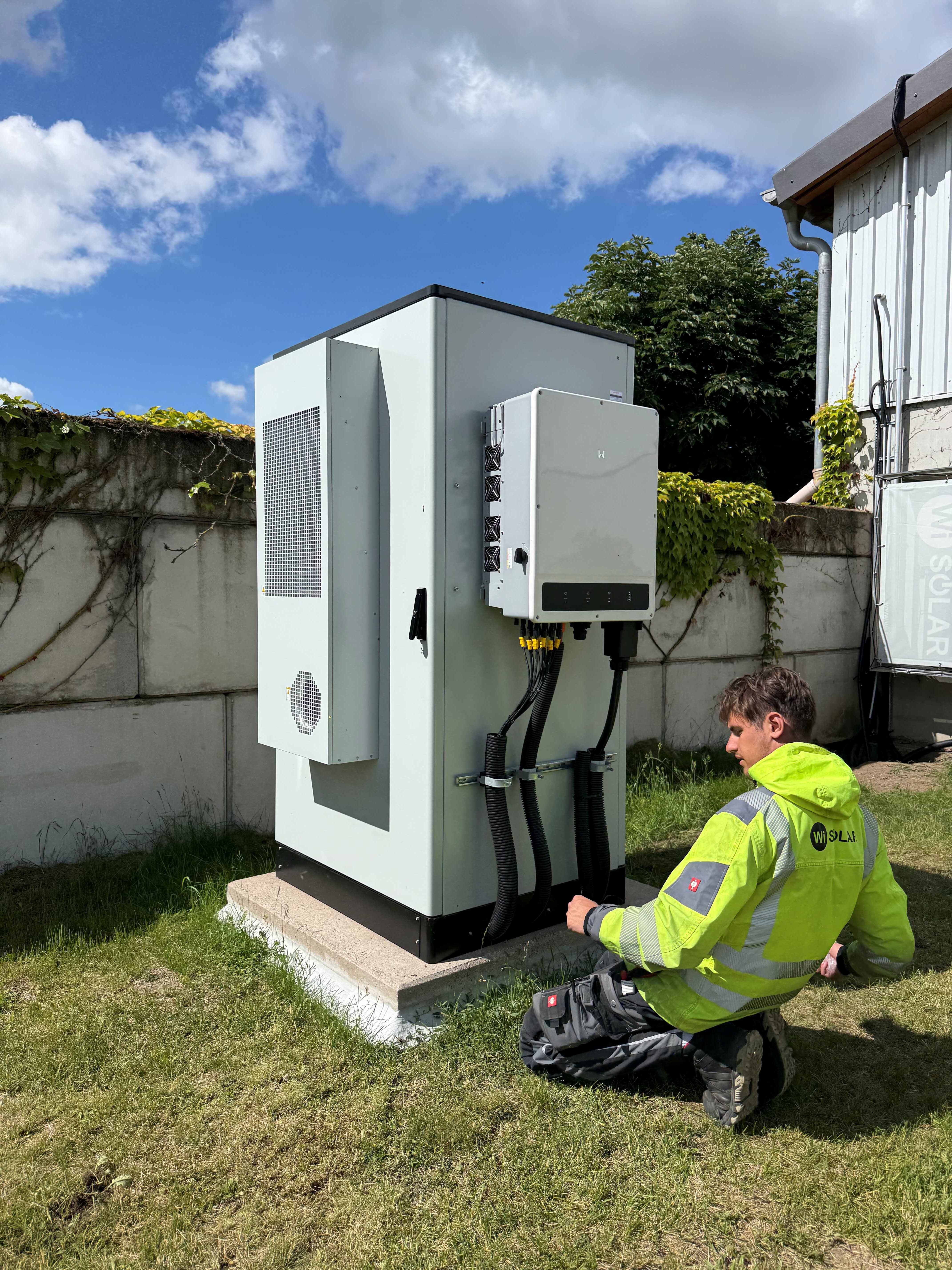
 On a livestock farm, a reliable power supply is about far more than just energy costs. If essential technical equipment fails, this can quickly have an impact on animal welfare. This was exactly the challenge faced by farmer Jonas, a long-standing customer of our specialist partner Wi Solar GmbH. He wanted to use more of the solar power generated on his farm while ensuring that his animals would continue to be reliably supplied even in the event of a power outage. The solution was a battery storage system with backup power functionality.
Higher self-consumption and greater security of supply
The farm requires around 67,000 kWh of electricity each year. The existing photovoltaic system, with an output of 51 kWp, generates approximately 53,000 kWh of solar power per year. It already makes an important contribution to the farm’s energy supply and avoids around 25 tonnes of CO₂ emissions per year.
Until now, however, only around 48 per cent of the solar power generated could be used directly on the farm. In addition, ensuring a reliable power supply for his animals was particularly important to the farmer. A prolonged power outage could quickly become critical, as a continuous supply of electricity – for example, for cooling in the pig barn – is essential for the animals.
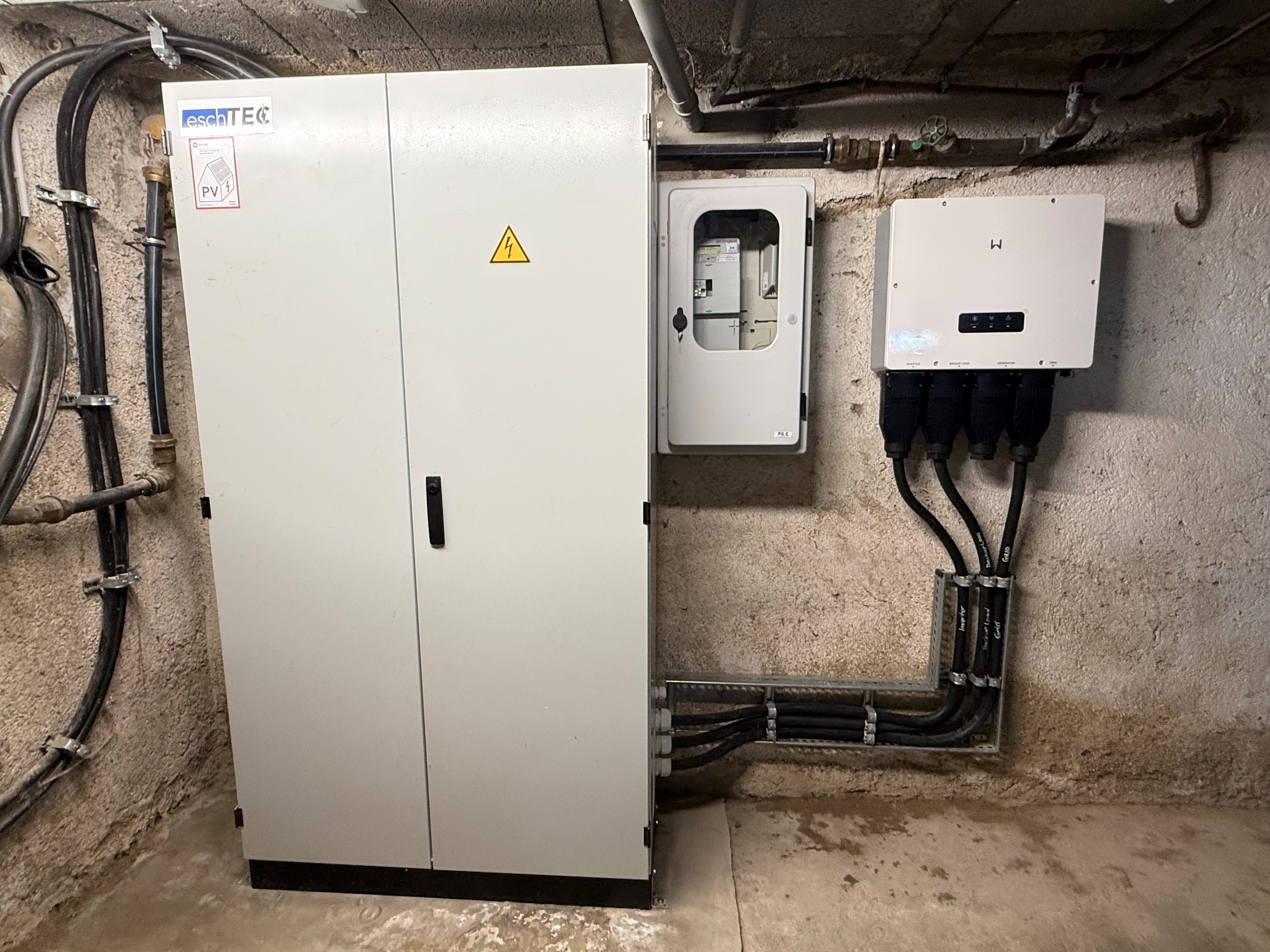 GoodWe battery storage with backup power functionality
The GoodWe battery storage system, with a storage capacity of 112 kWh and backup power functionality, was the right solution for the farmer. The combination of battery storage, inverter and Transfer Switch not only enables solar power to be stored, but also supports backup power and generator operation.
This means that, in the event of a power outage, cooling in the pig barn can continue to operate for at least four hours, giving farmer Jonas sufficient time to take action. At the same time, surplus solar power can be stored and used on the farm at a later time. This increases the self-consumption rate by more than 40 per cent, reduces electricity drawn from the grid and improves the economic efficiency of the overall system.
This example demonstrates the additional benefits that a battery storage system with backup power functionality can offer, particularly for agricultural businesses. For farmer Jonas, the new storage solution therefore combines three key advantages: higher self-consumption, improved economic efficiency and, most importantly, greater security of supply for his farm and his animals.